Los Angeles gives us long days, strong sun, and the kind of mild evenings that tempt you outside nine months of the year. The right overhead structure turns that temptation into a habit. At Ridgeline Outdoor Living, we spend a lot of time helping homeowners decide whether their yard wants a custom pergola or a fully covered patio. The answer looks simple from a distance — one filters light, the other blocks it — but the best choice depends on microclimate, architecture, budget, and how the space needs to work every day.
Below is how we make that call and the quiet design decisions that make the investment pay off over time.
What we mean by each structure
A custom pergola is an open roof framework on posts. It can be wood, aluminum, or steel. Its rafters and slats filter light, and in some designs, operable louvers control shade. Properly detailed, a pergola can carry vines, heaters, lighting, a fan, even motorized screens. It is not by default waterproof.
A covered patio uses a solid roof. Think of it as an outdoor room edge: a weathering layer that sheds rain into gutters and downspouts. The roof can be framed in timber or steel, topped with shingles, standing seam metal, or translucent polycarbonate. When attached to the home, we tie into the existing roofline and flash it to stay watertight. Free‑standing versions read as pavilions.
Both can be beautiful. Both can raise property value. They perform differently.
What Los Angeles weather asks of shade
LA’s coastal plain, foothills, and valleys each behave a little differently. Westside neighborhoods see morning marine layer and softer afternoon sun. Pasadena and the San Fernando Valley can jump 10 to 15 degrees warmer on summer afternoons. Hillsides get wind. The right roofline answers those patterns in the simplest way possible.
A pergola shines when you want filtered sun and airflow. In Santa Monica, filtered light over a south patio keeps the space bright, without the claustrophobia of a low, solid roof. In Encino, where August hangs heavy, a higher pergola roof with a fan allows hot air to rise and move out. Operable louvers help a lot, letting you close for a rare rain day and open for most days.
A covered patio earns its keep when you want a roomlike feel, a dry surface, and deep shade. In Los Feliz, a second family room that functions year‑round often means a real roof with insulated panels, recessed lights, and built‑in heaters. When a home opens with large sliders, a covered patio can act as an intermediate roof plane that keeps glare off the interior.
Sun angles, glare, and where the shade actually lands
Overhead shade that looks good on paper can still miss the mark. We model sun angles for solstices and equinoxes to see how the beams, louvers, or roof shields the space at noon and at 4 pm. East patios want morning management. West patios beg for late afternoon defense. South patios take overhead radiation most of the day. If you plan to place an outdoor kitchen or TV, we map glare and heat so the cook and screen do not take the worst of it.
Louver orientation matters. Run louvers perpendicular to the sun’s dominant path for better control. Set spacing to balance shade density with daylight. A small change in rafter depth or spacing shifts the feel from dappled to dense.
Rain happens here, and it needs a path
Even in a drought‑prone city, we get concentrated winter storms. Flat slabs without proper slopes puddle at posts and door thresholds. Ridgeline integrates roof and ground planes so water leaves gracefully. For pergolas, that means positioning posts to avoid roof drips on furniture and running discreet steel edge flashings to kick water off in predictable lines. For covered patios, we design gutters and downspouts that tie into existing drainage, not onto the lawn. If your lot already struggles, we route downspouts to dry wells or to a French drain. Done right, the roof becomes part of the solution, not a new problem. If you have questions about subsurface water, our project managers often reference the best practices in French Drains Explained and How to Solve Common Yard Drainage Problems.
Wind, seismic, and the way posts meet the earth
Santa Ana winds find weaknesses. So do earthquakes. We engineer posts and connections for both. For a free‑standing pergola, we often specify steel post bases epoxied into over‑sized footings with rebar cages. In many neighborhoods, a 24 inch by 24 inch by 24 inch footing per post is a common starting point, then adjusted for soil and loads. Where soils are expansive or fill is deep, we use deeper piers and wider spread footings. For attached covered patios, the ledger connection deserves care. We lag into structural framing, not just sheathing, and we flash the top and sides so water cannot chase into the wall.
Hillside properties bring another layer. Retaining walls for hillside properties already carry loads; we do not want to add roof posts to the top of a marginal wall. We either set independent piers behind the wall or design new walls with the roof load in mind. Our team’s experience with The Complete Guide to Hillside Landscaping in Los Angeles helps us anticipate these constraints early.
Materials that thrive in Southern California
Cedar and redwood still make beautiful pergolas. They hold finish, stay dimensionally stable, and smell like the craft of building. In fire‑prone zones, we will often use steel posts with wood rafters, or all‑aluminum systems finished to look like wood. Aluminum does not check or rot and keeps weight down on decks. Ipe and other hardwoods remain an option for high‑end work, although supply, cost, and fire performance limit their use in some areas.
For covered patios, we favor two structural paths. On contemporary homes, powder‑coated steel frames with a standing seam metal roof give a crisp, low profile and long life. On traditional homes, framed timber with composition shingles that match the house roof sits comfortably. When daylight matters, we use multiwall polycarbonate or glass inserts to brighten the covered area, while still shedding water.
If your property is in a designated WUI zone, ember resistance guides the palette. Vented soffits become non‑vented or use ember‑resistant vents. Decking and fascia avoid easily ignited materials. We specify proper defensible space planting from The Best Drought‑Tolerant Plants for Los Angeles Yards and The Ultimate Guide to Drought‑Tolerant Landscaping in Los Angeles to keep ignition fuels low.
The quiet luxury of operable louvers
Louvered pergolas have changed the conversation. When louvers close, rain stays out and heat builds under the lid unless we vent and insulate. When open, the space breathes. Motorized systems also allow integrated lighting, heaters, and screens. They cost more than a fixed slat pergola, but for many families the year‑round flexibility justifies it. We often place louvered zones over dining or an outdoor kitchen and simpler fixed slats over lounge zones.
In Los Angeles, expect quality louvered installations to range roughly from the mid thirties to the mid sixties in thousands of dollars for a common 12 by 16 or 15 by 20 footprint, depending on brand, powder coat, integrated wiring, and site access. Add wind sensors and rain automation if the yard sits exposed.
Solid roofs and the feel of an outdoor room
Covered patios, especially when attached, ask us to think like architects. Roof pitch should respect the home. Fascia lines should tie in. Soffits conceal lights and speakers. Where a second story looks down on the roof, we select a finish that looks good from above, not just from below. We also detail ceiling insulation to reduce radiant heat on hot afternoons. Built‑in infrared heaters let you host in January without a stack of blankets.
Solid roofs integrate beautifully with the rest of the yard. We often run a paver patio or stained concrete slab out beyond the roof to create sun pockets. When clients ask about surfacing, we walk them through Paver Patios vs Stamped Concrete: Pros and Cons and 15 Paver Patio Designs Los Angeles Homeowners Love so the material beneath the roof and the open terrace complement each other.
Cost ranges that match reality in LA
Every site is different, but after hundreds of projects across the city, we see consistent bands.
A custom wood pergola in a 12 by 16 to 15 by 20 size, built with quality lumber, finish, and integrated lighting, often lands around 12 to 25 thousand dollars. Upgrading to steel posts, higher finish levels, or more complex geometry moves that up. Aluminum pergolas, depending on system and features, tend to sit in the 18 to 35 thousand range. Motorized louvered systems are typically 35 to 65 thousand, and can exceed that with larger spans and embedded tech.
A covered patio with a solid roof spans a wider range. A free‑standing 12 by 20 pavilion framed in wood with a shingle roof can start around the mid thirties and go to the mid fifties. An attached roof with custom steel, standing seam metal, integrated heaters, fans, lighting, and a detailed ceiling typically runs from the fifties to the eighties. On complex tie‑ins, high architectural demands, or limited access, six figures is not unusual.
Permits and engineering matter. Structural engineering generally ranges from 2 to 7 thousand, permits from 1.5 to 5 thousand, depending on jurisdiction and complexity. Electrical trenching, gas lines for heaters or an outdoor kitchen, and drainage connections can add several thousand more. These are not extras; they are the skeleton and arteries that make the space safe and seamless.
How you plan to use the space drives the choice
Design decisions sharpen when we stop talking about structures and start talking about life. If you want to grill year‑round, host a dozen friends, and watch a game outside, overhead cover that keeps smoke moving and heat under control will shape your choice. Outdoor Kitchen Trends Los Angeles Homeowners Are Choosing lean toward built‑in grills with proper venting, undercounter refrigeration, and durable counters. A louvered roof above a kitchen lets heat escape when open, but will not keep counters bone‑dry during a hard sideways rain. A solid roof will, but might need a well‑placed vent hood and makeup air to keep smoke out of the seating area. Ridgeline Outdoor Living’s Guide to Outdoor Kitchen Design goes deep on this, but the short version is simple: the cook should be happy on a sunny August afternoon and in a January sprinkle.
Televisions, speakers, and lighting further tilt the decision. A covered patio protects electronics with less drama, allows recessed downlights, and hides wiring. A pergola keeps the ceiling open, so we specify outdoor‑rated pendants, wireways concealed in beams, and surface‑mounted heaters that avoid blinding the viewer.
Business Name: Ridgeline Outdoor Living
Address: 845 E Walnut St, Pasadena, CA 91101, United States
Phone: (626) 469-5822
Ridgeline Outdoor Living
Ridgeline Outdoor Living is a Pasadena-based landscape design-build company serving Greater Los Angeles with custom outdoor living, hardscape, and drought-tolerant landscape solutions. The company specializes in patios, retaining walls, outdoor kitchens, drainage, hillside projects, and turnkey landscape construction, handling projects from design and permitting through final build and warranty.
845 E Walnut St, Pasadena, CA 91101, USA
Business Hours:
- Monday – Saturday: 8:00 AM – 6:00 PM
- Sunday: Closed
Follow Us:
Five decision drivers and which structure tends to win
- Need for a dry zone during rain: covered patio usually prevails, louvered pergola can work for light showers but leaves edges exposed. Desire for daylight and sky views: pergola wins, especially with fixed slats or spaced rafters; covered patios can add skylights but reduce the open feel. Integration with indoor rooms and glare control: covered patio often best, creates a deep shade band at sliders and keeps interiors cooler. Flexibility across seasons: louvered pergola balances summer airflow and winter protection; for the most roomlike comfort, covered patio with heaters leads. Budget relative to finish: a simple pergola yields strong design per dollar; the moment you add motors, heaters, and tech, the gap to a covered patio narrows.
Architecture, not add‑ons
The quickest way to cheapen either structure is to treat it like a bolt‑on. At Ridgeline, we study rooflines, fascia thicknesses, and window head heights so the new shade element reads as part of the original intent. On a mid‑century home in Studio City, a low, wide steel pergola with slender posts echoed the home’s eaves and opened views to the garden. On a Spanish revival in Hancock Park, a stuccoed, arched covered patio with a clay tile roof matched the house, right down to the soffit vents and corbels. Those choices pay off the day we complete the work and ten years later when someone tours the property and says the backyard is why they want the home.
Lighting that looks like it belongs
Good lighting makes outdoor rooms. We avoid the airport runway look by blending layers. Downlights handle tasks over the table and kitchen. Soft strip lighting in beams or under counters draws a line along surfaces. Discreet uplights on posts or nearby trees add depth. If you are browsing ideas, 10 Outdoor Lighting Ideas for Los Angeles Landscapes lays out patterns that work without glare. On pergolas, we pre‑route conduits in beams and posts so future fixtures do not leave exposed wire. On covered patios, we frame for junction boxes and housings before sheathing. These details stay hidden but make the space feel intentional and calm.
Maintenance and lifespan
Every material ages. Wood needs re‑staining or repainting every few years, more often on sunny exposures. Aluminum needs gentle washing. Steel wants a careful coating system. Roofs collect debris and expect gutter cleaning, especially under jacarandas or pines. Hardware lasts longer when protected from sprinkler overspray and ocean air. We choose fasteners and brackets that match the site’s corrosion exposure. Clients who want the lowest ongoing maintenance often land on aluminum pergolas or steel framed covered patios with metal roofs.
Permitting and neighborhood rules
City and county jurisdictions view these structures differently. Height limits, setbacks, and whether the roof is attached to the house all affect the permit path. In some areas, HOA design review adds an extra step. We handle drawings, engineering, and submittals, and we set expectations on schedule. A simple pergola can move through in a few weeks. An attached covered patio with structural tie‑ins can take several months, especially during busy cycles. Starting early avoids disappointment.
Here is a compact pre‑build checklist we use with clients to keep the process smooth:
- Survey the site for utilities, easements, and setbacks so posts and footings land legally and safely. Confirm structural tie‑in points and flashing paths if attaching to the home. Map drainage and plan downspout terminations into approved systems. Lock the electrical plan early, including circuits for heaters, fans, and lighting loads. Verify WUI or hillside requirements, plus any HOA design standards.
When a hybrid earns its way
Some yards do not want to be pinned to either camp. We often design a hybrid that places a solid roof over the primary dining and kitchen zone, then extends a pergola roof out toward the lawn. This sequence gives a dry island for a table and cook, and a luminous lounge area beyond it for sun in spring and fall. If privacy is a concern, we integrate side screening with slatted wood or motorized fabric panels. If bugs are a rare but real frustration, we add retractable screens on the solid roof zone without caging the entire patio.
Landscape, hardscape, and the ground plane below
Overhead structure only works as well as the ground it covers. A covered patio over cracked, sloping concrete will never feel right. We design the floor in concert with the roof, setting elevations that protect thresholds, meet step code, and move water. For surfacing, porcelain pavers on pedestals, concrete with a light sand finish, or natural stone each have roles. When a driveway rebuild ties into the project, we coordinate elevations and finishes there as well, drawing on The Most Popular Driveway Materials in Los Angeles and 15 Driveway Paving Ideas to Improve Curb Appeal. If kids or dogs own the lawn, we weigh Artificial Turf vs Sod: What’s Best for Los Angeles Homes? And choose a surface that stays green without draining the city’s reservoirs.

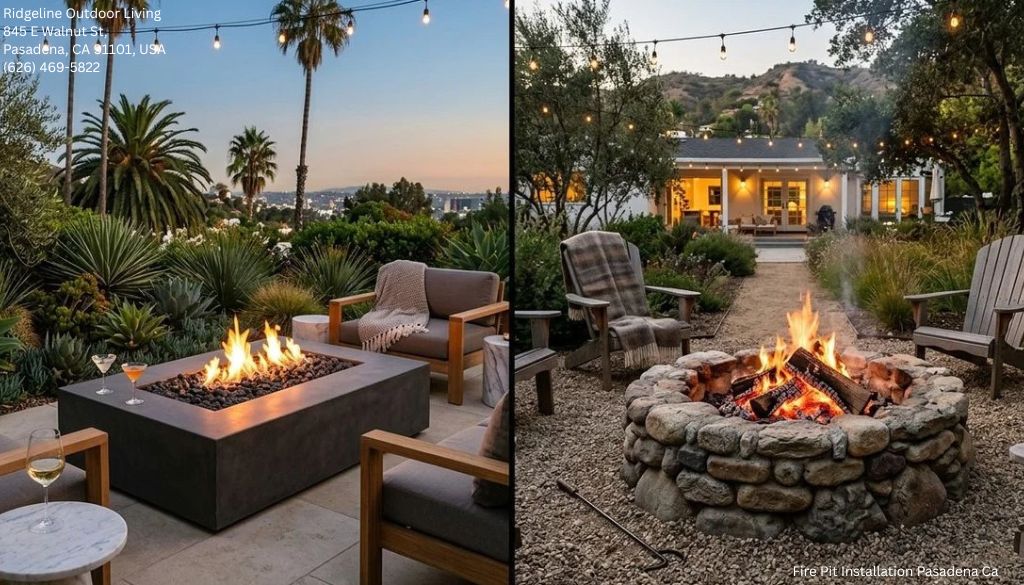
Planting around the structure should cool, not crowd. Drought‑tolerant grasses, salvias, and aromatic herbs calm the eye and the maintenance schedule. landscaping guides If you want sparkle, a narrow rill or water bowl can add sound and movement. The ideas in 12 Water Feature Ideas for Luxury Los Angeles Backyards translate easily to modest spaces. Put a small fire feature where winter gatherings happen; 12 Backyard Fire Pit Ideas for Entertaining Year‑Round can help spark the imagination without overwhelming the terrace with a campfire vibe.
Return on investment and daily life
Most clients ask about value. Based on our projects and resale feedback, well executed overhead structures often contribute meaningfully to perceived square footage. Appraisers do not count them as interior area, but buyers walk through a home and imagine life outdoors. We see real estate listings for homes with finely detailed patios and pergolas attract more showings and better offers. If you plan to move within five years, keep the language of your home’s architecture. If you plan to stay, tune the space for your rituals. Either path aligns with 10 Hardscaping Features That Increase Property Value and 12 Outdoor Living Features That Add the Most Value, but the biggest return is how often you use the yard.
How Ridgeline makes the call with you
Our process is not glamorous. We measure sun, map wind, set elevations, calculate footings, and sketch profiles until the structure looks inevitable. We talk through budgets with candid ranges, so the wish list meets reality before we start drawings. We loop in electrical and gas early, especially if an outdoor kitchen, heaters, or a fire feature is part of the plan. We coordinate with drainage and grading so downspouts feed legal outlets and patios stay dry. If the home sits on a hillside or within stricter fire zones, we incorporate those rules in the first pencil line, not as an afterthought.
Clients often find us while researching topics like Pergolas vs Covered Patios: Which Is Right for Your Home? Or Why Los Angeles Homeowners Are Investing in Custom Pergolas. We also hear from homeowners comparing What Does Hardscape Construction Cost in Los Angeles? Or browsing How Ridgeline Outdoor Living Designs Stunning Outdoor Spaces. However you come to the decision, the difference on site is the same. Small, smart choices add up: a beam depth that blocks low sun without feeling heavy, a post location that frames a view instead of standing in it, a gutter outlet that sends water to a drain rather than across a walkway.
Two brief stories from the field
In Mar Vista, a family wanted shade for a play area and a dinner table close to the kitchen. Their budget could not support a full roof with heaters and skylights. We designed a cedar pergola with deep rafters and a slightly denser slat pattern over the table, then a more open pattern over the play zone. We ran low‑voltage leads for string lights and a fan, and we routed down their slope into a small French drain to pick up concentrated runoff. Three years later, the pergola still reads warm and intentional. The kids now do homework there, and the table has seen more dinners than they imagined when they wrote the first check.
In Glendale, a north patio connected to a set of steel doors that overheated in summer and dripped with condensation in winter. A slim steel framed covered patio with a standing seam roof, two skylight bays, and insulated ceiling panels solved both problems. We tied the roof into existing downspouts, added two quiet heaters, and placed a single linear pendant over the table. The inside now stays cool without closing the drapes, and the outside functions as the family’s favorite room.
The bottom line
Shade is not just shade. A custom pergola pours light through a affordable landscapers in Pasadena pattern and breathes. A covered patio holds a room edge and protects. Both can anchor a resort‑style backyard, either paired with a pool or a simple paver terrace. Both can be the frame that makes an outdoor kitchen work the way you hope. The better the design fits your site and your life, the more it will feel like part of the home rather than a piece of backyard furniture.
If you are weighing options, walk the yard at 9 am, 2 pm, and 6 pm. Notice glare, hot spots, breezes, and how you move. Gather a few images from 10 Outdoor Living Ideas Transforming Los Angeles Backyards and 15 Luxury Hardscape Ideas for Southern California Homes to define the mood. Then sit down with a builder who will talk about structure, drainage, and permits with the same calm voice they use for finishes and fixtures. That is where decisions start paying off.