Los Angeles is a city stitched to its hills. From Silver Lake to the Hollywood Hills and the switchbacks of Mount Washington, many homeowners inherit steep terrain that looks unbuildable at first glance. Terraced landscaping transforms those slopes into a sequence of purposeful rooms, each with its own function, view, and microclimate. Done well, terraces raise property value, protect against erosion, and turn precarious ground into a daily pleasure. Done poorly, they create drainage headaches and ongoing structural risk. The difference lives in the details, and it starts with a design-build team that understands both geology and hospitality.
Ridgeline Outdoor Living has been carving usable space into Los Angeles hillsides for years. We treat every slope as a puzzle with five interlocking pieces: structure, water, access, planting, and program. When those pieces align, a hillside becomes not just safe, but singular.
What Terracing Really Solves on an L.A. Slope
A hillside in Southern California is dynamic. Winter storms can dump two or three inches of rain in a day. Long dry spells stress roots and shrink clay soils, then the next storm swells them again. Gravity never takes a day off. The Complete Guide to Hillside Landscaping in Los Angeles would begin with that reality.
Terracing breaks a continuous slope into flat benches separated by retaining walls. Each bench reduces the length of water run across soil, which slows erosion and reduces the risk of sloughing. It also creates actual outdoor rooms: a dining patio near the kitchen, a quiet overlook mid-slope, a play lawn a bit lower where a missed soccer ball cannot roll two blocks downhill.
For many hillside properties, “good enough” is not enough. Local codes often require geotechnical reports, drainage plans, and engineered walls. If your hillside has a slope steeper than roughly 2:1, sits in a designated hillside area, or shows signs of creep or old slides, building officials and insurers will insist on robust solutions. That is not red tape for its own sake. It is risk management on land that moves.
The Structural Bones: Retaining Walls, Footings, and Drainage
Retaining walls for hillside properties are both the backbone and the first line of defense. Homeowners often picture a handsome veneer, but what matters most happens behind the face.
We specify wall systems based on soil conditions, wall height, and access constraints. In cohesive soils with moderate heights, segmental retaining walls with geogrid reinforcement are reliable and cost effective. Where space is tight or loads are higher, we look to cast-in-place concrete with deepened footings or caissons pinned into competent strata. On fractured shale or decomposed granite, drilled piers with grade beams distribute loads without relying on shallow bearing that may not exist.
Business Name: Ridgeline Outdoor Living
Address: 845 E Walnut St, Pasadena, CA 91101, United States
Phone: (626) 469-5822
Ridgeline Outdoor Living
Ridgeline Outdoor Living is a Pasadena-based landscape design-build company serving Greater Los Angeles with custom outdoor living, hardscape, and drought-tolerant landscape solutions. The company specializes in patios, retaining walls, outdoor kitchens, drainage, hillside projects, and turnkey landscape construction, handling projects from design and permitting through final build and warranty.
845 E Walnut St, Pasadena, CA 91101, USA
Business Hours:
- Monday – Saturday: 8:00 AM – 6:00 PM
- Sunday: Closed
Follow Us:
Every wall needs controlled relief of hydrostatic pressure. That means a perforated drain at the base, wrapped in filter fabric and surrounded by clean drain rock, with a protected outlet daylighting at a safe location. For walls over about three feet, we often integrate vertical weep ports or gravel chimneys so incidental moisture can exit without building pressure. French drains explained simply are subsurface trenches that intercept water before it reaches the wall. On long slopes, we use them as interceptors upslope of terraces, then tie them into conduits that survive debris and roots. In older neighborhoods, we test for downstream capacity since a well built drain is only as good as the outlet it feeds.
Soil nails and shotcrete sometimes make sense on previously disturbed slopes that have limited access for excavation. They allow a near vertical cut with reinforcement driven into the slope. While more expensive per linear foot than many alternatives, they can avoid the cost and disruption of exporting hundreds of yards of soil.
We do not play games with the minimums. An eight foot wall with a four inch drain line that daylighted into an undersized curb cut cost one client two flooded garages before we reworked the system. The fix required a sump and pump rated over 100 gallons per minute with a backup power source. It was not glamorous, but the next atmospheric river passed without a drip.
Access and Circulation Between Levels
A beautiful terrace is not useful if you cannot reach it safely with a glass in one hand and a toddler in the other. We design stairs with a consistent rise and run ratio, typically 6 to 7 inch risers and 12 inch treads for comfortable walking. Long flights are broken with landings every 8 to 10 risers, oriented to views where possible. Handrails should feel solid to a nervous grandparent, not just meet code on paper.
On steeper sites, we alternate broad steps with planted risers to slow the visual descent and reduce glare. In shaded canyons, textured pavers or saw-cut concrete improve traction. Lighting is non-negotiable. Low glare fixtures mounted under treads or along handrails illuminate the path without broadcasting to the neighbors. These choices are part of 10 Outdoor Lighting Ideas for Los Angeles Landscapes, and they matter most where a misstep has consequences.
Materials that Look Right and Last
Terraced landscapes are a long-term investment, so materials must tolerate heat, occasional frost, and irrigation overspray while looking intentional next to midcentury stucco and glass or a classic Spanish revival.
Concrete pavers are a workhorse for benches and stairs. They drain well on a compacted base, allow repairs without jackhammering, and come in sizes that keep patterns calm on small terraces. Many clients ask about Paver Patios vs Stamped Concrete: Pros and Cons. Stamped concrete can lower initial costs for large areas and offers continuous surfaces, but cracks can be more visible and repairs are rarely invisible. Pavers cost a bit more upfront, yet they disperse microcracking and handle movement better on slopes.
For wall faces, split-face block with a hand-troweled stucco cap gives a timeless look and takes paint or lime wash later if tastes change. In high visibility areas, natural stone veneers in muted grays and creams sit quietly behind plantings and reflect evening light. Wood accents need careful species selection. We specify thermally modified ash or ipe where budget allows, and we detail air gaps behind cladding so trapped moisture does not start a decay clock.
Permeable paving is not just a buzzword. On terraces sized under 400 square feet, a permeable system can often handle storm events without connecting to storm drains, depending on soil percolation. That reduces runoff and helps solve common yard drainage problems before they begin.
Planting the Steps Between
The best drought-tolerant plants for Los Angeles yards find their perfect homes on terraces, where microclimates stack from top to bottom. Upper terraces receive more sun and wind, favoring salvias, rosemary, and manzanita that enjoy lean soils. Middle terraces can host fruit trees on dwarf rootstock, with citrus thriving where cold air does not settle. Lower terraces, often cooler and moister, welcome ferns, lomandra, and carex that soften walls.
We group hydrozones by exposure and use drip irrigation with pressure-compensating emitters. A slope-friendly rule: place thirstier plants nearer hand and hose, then taper to ultra low water selections upslope. The Ultimate Guide to Drought-Tolerant Landscaping in Los Angeles would include groundcover workhorses like Dymondia and myoporum that control erosion without shouting for attention. On fire-prone frontiers, maintain lean zones near structures and avoid resinous hedges in tight spaces. Gravel mulch rather than bark near wood elements reduces ember risk.
Clients often ask about artificial turf vs sod on terraces. Artificial turf shines where traffic is high and maintenance access is poor. Modern infills stay cool enough when shaded and paired with trees. For barefoot play lawns and pet areas, a high quality permeable base with antimicrobial infill controls odor and runoff. Real sod looks and feels wonderful, but irrigation overspray on walls and slip risk on adjacent steps make it a less frequent choice on steep sites. Artificial Turf Installation: Everything Los Angeles Homeowners Should Know comes into play when the flat area is small and the owner wants a green spot year round.
Water Is the Quiet Project Manager
Water tells you if a terrace will last. On our walk-throughs we look for silt fans after storms, rust stains on walls, and algae where downspouts meet grade. French drains are one tool, but they are part of a system. Swales along the back of a terrace intercept sheet flow before it reaches hardscape. Slot drains or narrow trench drains at the toe of stairs keep treads dry. Where terraces meet the house, we backflash and slope away decisively. Ten signs your yard needs better drainage are obvious once you know them: ponding after 48 hours, cracks with fresh soil extrusion, and efflorescence on block faces are among the first.
On lots with limited downhill discharge, dry wells can absorb roof runoff if soils percolate at more than 1 inch per hour. Where they do not, we design a sump with a pump sized for peak inflow, protected by debris screens. How to prevent yard flooding with proper drainage solutions is about redundancy. We set overflow paths for the rare storm that overtops design capacity so that water knows where to go, not where it hopes to.
Crafting Uses Level by Level
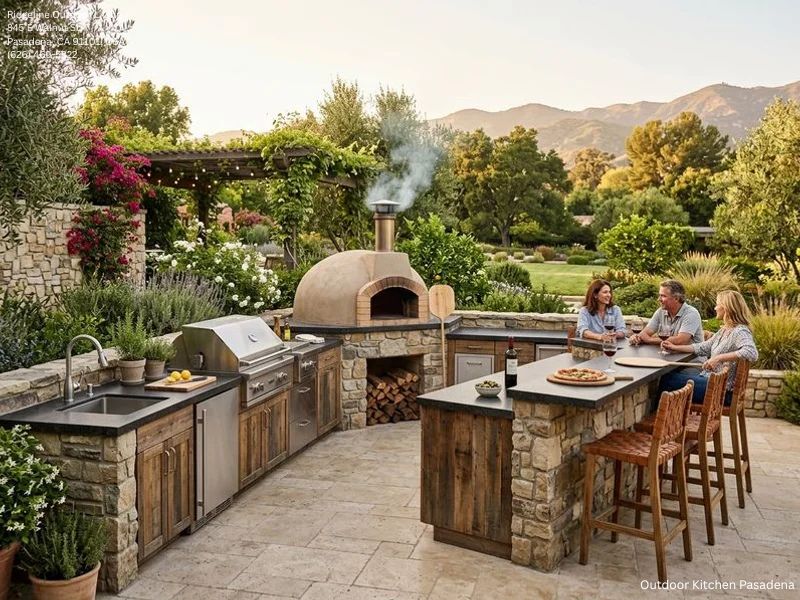
A hillside becomes compelling when each bench has a specific purpose. Program flows from the top down, mirroring daily life. A morning coffee terrace tucked near the bedroom catches first light. The main gathering terrace near the kitchen supports an outdoor kitchen, dining, and a small lounge anchored by a fire feature. A lower level might become a quiet lawn or even a plunge pool with a safety cover and a tempered glass guardrail that leaves views intact.
Here are five terrace program ideas that have worked especially well for Los Angeles homes:
- A compact outdoor kitchen with a 30 inch grill, undercounter fridge, and 8 feet of counter for plating, paired with a pergola for filtered shade. A conversation pit sized for six around a linear gas fire, shielded from wind by a low planting hedge that stays under 30 inches. A meditation deck cantilevered slightly over a planted slope, with bench seating and soft footlights. A children’s discovery garden with raised planters, edible herbs, and a pebbled rill that runs only during playtime. A small projector wall for movie nights, aligned so sound projects back into the property, not the neighborhood.
12 Backyard Fire Pit Ideas for Entertaining Year-Round often include tabletop flames or portable bowls, but on terraces, permanent gas lines with electronic ignition and flame sensors are worth the upgrade. They allow quick shutoff in wind and integrate with smart controls. As for shade, pergolas vs covered patios is a real question. On a hillside, pergolas are lighter and keep views open while breaking heat. A covered patio belongs close to the house where tie-ins to structure and drainage are simplest.
Lighting That Works for Safety and Ambience
Terraces call for layers. Step lights define the path. Downlights in pergolas mark dining and work surfaces without glare. Narrow beam accent lights pick out sculptural plants or stone while leaving the rest dark. We avoid uplighting tall trees near bedroom windows. 10 Outdoor Lighting Mistakes That Reduce Curb Appeal include overlighting stairs with bright, blue-tinged LEDs and peppering fixtures without a plan. Low, warm light on human faces looks good in photos and real life.
Costs, Phasing, and Value in the Los Angeles Market
What does hardscape construction cost in Los Angeles on a hillside with terraces? Ranges are honest because variables matter. For context:
- Engineered segmental retaining walls on accessible sites often land around 150 to 300 dollars per square foot of face, including excavation, base, geogrid, backdrain, and compaction. Tight access or export can raise that 30 to 60 percent. Cast-in-place concrete with caissons can range from 250 to 500 dollars per square foot of face, more where deep drilling or complex reinforcing is required. Paver terraces with proper base and edge restraint typically cost 35 to 60 dollars per square foot, excluding railings and lighting. Premium stone raises it to 70 to 120 dollars. Outdoor kitchens range widely. How much does an outdoor kitchen cost in Los Angeles? A modest built-in with a grill, fridge, and 12 linear feet of counter often falls between 18,000 and 35,000 dollars installed. Add appliances like a pizza oven or custom steelwork, and 50,000 to 90,000 dollars is common.
Many clients phase work over two or three years. We begin with geotechnical study, drainage, and primary walls. Once slopes are stable and water is contained, we add stairs, railings, and the main terrace. Planting and secondary features follow. This staging respects budgets while securing the site.
The value case is strong when terraces transform unusable land. 10 Hardscaping Features That Increase Property Value regularly list retaining walls that create livable square footage, outdoor kitchens, high quality lighting, and well executed fire and water features. Appraisers vary in how they capture this, but buyers feel the difference when a home lives larger than its footprint.
Three Project Snapshots
A midcentury in Laurel Canyon had a narrow balcony and a 35 degree slope. The owners wanted a dining terrace for eight and a play area for their two kids. Access allowed a mini-excavator, so we built two 4 foot terraces with geogrid walls faced in split block and stucco caps. A 320 square foot paver dining terrace with a 12 foot pergola sits on the upper bench. The lower bench holds a 14 by 18 foot artificial turf play lawn with a soft fall underlayment. Total project cost, including lighting and railings, was in the mid 200s. The house later appraised over 300,000 dollars higher than its pre-terrace estimate, driven by usable outdoor space.
In Mount Washington, an early craftsman sat on sandy soils with evidence of past sloughing. We drilled 18 inch caissons to depths between 12 and 18 feet, tied with a grade beam, then shotcrete faced the slope. A cedar bench runs the length of the main terrace, and planters soften the concrete. A sump and pump manage discharge to the street because downhill drainage capacity was limited. During the January storms, neighbors flooded. Our client did not. The budget was higher, but the risk profile demanded it.
On a Beachwood Canyon lot with big views and tough access, handwork ruled. We terraced with low, dry-stacked stone under 3 feet to avoid permits for walls, relying on broad slopes and planting to stabilize. A gravel meditation deck and a small water bowl bring sound and calm without adding structural load. This modest approach fit the site and the owners’ preferences, proving that not every hillside needs heavy concrete to sing.
Maintenance and Longevity
Terraces age well when maintained. We schedule seasonal checks on drains and downspouts, clean debris screens before forecasted storms, and test pump systems. Irrigation audits ensure emitters still deliver what the plant needs and not a drop more. We watch walls for movement using crack gauges on any suspect joints. Pruning maintains views and reduces sail on top-heavy shrubs that wind can pry from thin soils.
Materials matter here too. Sealing concrete and stone caps every two to three years slows staining. Stainless fasteners on wood in coastal areas avoid the rust that can split boards from within. LED fixtures with replaceable bulbs keep service simple.
How Ridgeline Outdoor Living Approaches Design-Build on a Hillside
Our process is evidence driven. We start with topographic survey and a soil report, then develop schematic terraces with drainage concepts baked in. We loop in structural engineering early, before anyone falls in love with a layout that cannot pencil out. stone hardscaping Pasadena The design phase tests options: Paver patios vs stamped concrete, pergolas vs covered patios, artificial turf vs sod. Each choice has a first cost and a life cycle cost. We put both on the table.
Construction sequencing is the quiet art. We protect existing structures, stage imports and exports to minimize trips on narrow streets, and keep neighbors informed. Safety is constant. Railings meet or exceed code at 42 inches on terraces over 30 inches above adjacent grade. Stairs and landings are measured to the eighth inch. Lighting circuits are mapped for maintenance.
We like to say How Ridgeline Outdoor Living Creates Functional Outdoor Living Spaces begins with restraint. Not every bench needs a feature. The best hillside landscapes feel inevitable, as if the house found its place on the slope and the terraces followed.
A Short Homeowner Checklist Before You Start
- Walk the property after a rain and photograph where water flows and pools. Gather records: any previous permits, plans, or soil reports save time and money. Define the two uses that matter most. Everything else supports them or waits for phase two. Be realistic about access. Note stairs, overhead lines, and narrow drives that affect cost. Set a contingency of 10 to 15 percent. Hillsides reveal surprises.
Bringing It All Together
Terraced landscaping is not a single idea, landscaping guides it is a sequence of interdependent decisions. Retaining walls prevent erosion on hillside properties, but only if drainage relieves pressure and planting holds soil between structures. A paver terrace feels generous if stairs arrive without strain and lighting warms faces rather than flooding eyes. Outdoor kitchen trends Los Angeles homeowners are choosing make sense on an upper bench if smoke rises away from doors and kids have a safe play spot below.
From French drains to pergolas, from grading plans to the last rosemary sprig by the grill, the work rewards patience. When a client steps onto a new middle terrace at sunset and suddenly understands how their home was always meant to live with the hill, that is the showstopper. The slope did not change. The way it holds people did.