A backyard pool in Los Angeles does more than cool you down. It anchors outdoor living, frames views, and sets the tone for how you relax and entertain. After designing and building dozens of pool landscapes across neighborhoods from Studio City to Manhattan Beach, I can say the most successful spaces honor three things: the microclimate on your lot, the way your household actually lives outside, and the long game of maintenance and resale value. The right plan ties all three together, not with trends for their own sake, but with materials, planting, and features that hold up to sun, wind, and real life.
Start with climate and context, not a catalog
The Los Angeles Basin packs more microclimates than people expect. A pool in Woodland Hills bakes on 100-degree days that a Santa Monica pool never sees. Hillside homes deal with slope and wind, while valley homes deal with heat and dust. Coastal homes invite fog and salt air. Those conditions affect everything, from how hot your decking gets underfoot to which plants can live next to chlorinated or saltwater splash.
If you work with a designer who practices here, they will start by standing in your yard at different times of day. Where does the sun land at 3 p.m. In August? How do the Santa Ana winds hit your property line? Do you have a neighbor’s second story peering in from the south? We use those observations to site sitting areas, choose textures that do not burn bare feet, and layer screening without blocking breezes. Well planned pool landscapes feel inevitable, because they respond to their setting rather than fighting it.
Business Name: Ridgeline Outdoor Living
Address: 845 E Walnut St, Pasadena, CA 91101, United States
Phone: (626) 469-5822
Ridgeline Outdoor Living
Ridgeline Outdoor Living is a Pasadena-based landscape design-build company serving Greater Los Angeles with custom outdoor living, hardscape, and drought-tolerant landscape solutions. The company specializes in patios, retaining walls, outdoor kitchens, drainage, hillside projects, and turnkey landscape construction, handling projects from design and permitting through final build and warranty.
845 E Walnut St, Pasadena, CA 91101, USA
Business Hours:
- Monday – Saturday: 8:00 AM – 6:00 PM
- Sunday: Closed
Follow Us:
Decking materials that stay cool, safe, and timeless
People often choose decking by how it looks in a showroom. In practice, surface temperature and slip resistance matter just as much. Light toned porcelain pavers, limestone, and textured concrete reflect more heat than dark stone and are gentler under midday sun. We target a dynamic coefficient of friction of at least 0.6 when wet, which gives reliable footing around splash zones. This is where finishes count. A tumbled or sandblasted texture provides traction without chewing up bare feet. Honed stone can be beautiful, but near a pool it turns treacherous when wet.
Saltwater systems are common in Los Angeles. They change material choice. Soft, dense stones like travertine can show edge wear faster at scupper spillways if they are not sealed and maintained. Porcelain handles salt particularly well, resists staining from sunscreen, and offers thin profiles that keep transitions clean. If you love the organic look of stone, choose a limestone or quartzite with low water absorption and ask your contractor to detail edges to avoid sharp arrises at the pool coping.
When clients ask about stamped concrete versus pavers, I explain the tradeoffs we see on real jobs. Stamped concrete can achieve continuous patterns and a lower initial price, but any crack reads across the field. Pavers allow for future access to utilities and spot repairs. On hillside sites in the Hollywood Hills, we often prefer pavers set on an engineered base because they tolerate small ground movement better than a monolithic slab. That judgment call dovetails with larger hardscaping conversations you might find in resources like Paver Patios vs Stamped Concrete: Pros and Cons or 15 Paver Patio Designs Los Angeles Homeowners Love. The right answer depends on soil, slope, budget, and how hard you are on the space.
Planting that respects water and keeps the pool clean
Around pools, plants are part sculpture, part privacy, and part maintenance budget. The best ones deliver form landscaping guides without dumping debris into the skimmer. We avoid needle-dropping conifers and fragile exotics that shed constantly. We also avoid spiky agaves right next to walkways, even though they love our climate, and we keep bee-magnet flowering shrubs a few steps back from lounge chairs.
Durable, pool-friendly choices for Los Angeles include low-litter structural shrubs like Westringia, clipped dwarf olives such as ‘Little Ollie’, and Lomandra varieties that read as soft grasses without going invasive. For sculptural notes, Agave attenuata offers drama without painful spines. Upright aloes provide winter color when most plants rest. Groundcovers like Dymondia margaretae knit joints between paving and tolerate light foot traffic. In shaded pockets near a wall, consider Australian tree ferns or rhaphis palms for a lush look that does not overwhelm.
Coastal and saltwater pool conditions push us toward plants with higher salt tolerance. Inland heat steers us to reflective mulches and drip irrigation that keep root zones happy while conserving water. If you are evaluating the broader yard, The Best Drought-Tolerant Plants for Los Angeles Yards and The Ultimate Guide to Drought-Tolerant Landscaping in Los Angeles are useful frames. The short version from years in the field: plant in bands, keep mature widths in mind, and give yourself at least 3 feet of clear deck before the first planting pocket to prevent mulch migration into the pool.
A note on lawns near pools. Natural sod cools the microclimate and feels great, but it tracks clippings and requires consistent irrigation. High quality artificial turf near the pool edge removes mess, yet it can heat up on triple digit days. If you go synthetic, choose a product with heat-reflective infill and specify a free-draining aggregate base to avoid odors. This decision mirrors a broader discussion many owners have read in Artificial Turf vs Sod: What’s Best for Los Angeles Homes? It often ends in a hybrid approach: a real lawn in a shaded or lightly used area, and a synthetic lawn near the water where runoff is controlled.
Shade structures that extend your pool season
Los Angeles sun can be relentless. Thoughtful shade makes a pool area usable from late morning through sunset. A custom pergola oriented to the sun path, a covered patio with a low, plastered ceiling that bounces light, or a tensile shade sail array can all work, provided you respect wind loads and anchoring. On hillside properties in particular, we design slender steel or aluminum structures that thread footing points between utilities and unnecessary excavation. This is where the conversation overlaps with Pergolas vs Covered Patios: Which Is Right for Your Home? Covered spaces win for all-day use and integrated lighting and fans. Pergolas win when you want dappled light, vines, and a lighter touch.
For families who entertain, an outdoor kitchen under shade transforms the pool deck into an all-day destination. Los Angeles cost ranges vary by configuration and finishes, but a well built linear kitchen with grill, storage, and stone counters often lands between $15,000 and $35,000, while larger L or U layouts with refrigeration, pizza ovens, and ice makers can reach $40,000 to $80,000. Gas lines, electrical capacity, and venting add to scope. Those figures sync with what many have seen in How Much Does an Outdoor Kitchen Cost in Los Angeles? And Outdoor Kitchen Trends Los Angeles Homeowners Are Choosing. Placing the kitchen far enough from the pool to avoid grease and smoke drift, but close enough that the cook still feels part of the party, makes the layout sing.
Water and fire features that suit the setting
Moving water is not just a visual trick. It masks neighborhood noise and creates rhythm. For a contemporary pool, sheet scuppers and razor-thin weirs read clean and pair well with porcelain or honed stone backdrops. For Mediterranean or Spanish Revival homes, copper scuppers or ceramic spill bowls with textured tile behind them bring warmth and patina. Baja shelf bubblers delight kids, but we set them far enough hardscaping contractors Pasadena from primary conversation zones to avoid constant splash on decking. The best designs keep sound in the pleasant 50 to 65 decibel range at lounge seating.
Fire near water creates a club-like feel, but safety and wind matter. In canyons where wind funnels, we specify low fire trays or linear burners recessed within a solid surround. On flatter sites, taller fire bowls work and read as sculpture. All burners should be certified, matched to gas supply, and placed to respect clearances from structures and overhead branches. If you are weighing options across your property, resources like 12 Water Feature Ideas for Luxury Los Angeles Backyards and 12 Backyard Fire Pit Ideas for Entertaining Year-Round showcase directions that translate nicely to poolside edges. Lighting the fire media with low output path lights avoids glare and keeps the flame the hero.
Lighting that flatters faces and water
Pool landscapes often look best at dusk, when the hard shadows soften and ambient light does most of the work. We aim fixtures away from sight lines and water surfaces to avoid mirror-like glare. Warm white at 2700K skews flattering for skin tones in seating areas, while 3000K can sharpen plant texture against a wall. Recessed step lights within seat walls guide feet without hot spots. Moonlighting from high branches or architectural arms can dapple the deck gently. RGB color shows well under water for special evenings, but day to day most families prefer a static warm scene that does not feel like a hotel lobby. If you enjoy browsing ideas, 10 Outdoor Lighting Ideas for Los Angeles Landscapes and 10 Outdoor Lighting Mistakes That Reduce Curb Appeal offer useful pointers that carry straight into pool design.
Privacy without claustrophobia
Privacy reads differently around a pool than at a dining terrace. People are in swimsuits. They want screening that feels safe but not walled in. We stack elements: a lower seat wall to catch towels and hold drinks, a band of evergreen shrubs to the height of a person standing in the neighbor’s yard, then strategic taller elements like a trellised jasmine panel or a fastigiate olive that lifts the eye without spreading. On lots with tight setbacks, we use narrow planters integrated into the deck with hidden drainage that does not feed chlorinated overflow into plant beds. On larger lots, an offset grove of drought tolerant trees provides psychological separation without building a fence.
Drainage that quietly saves the project
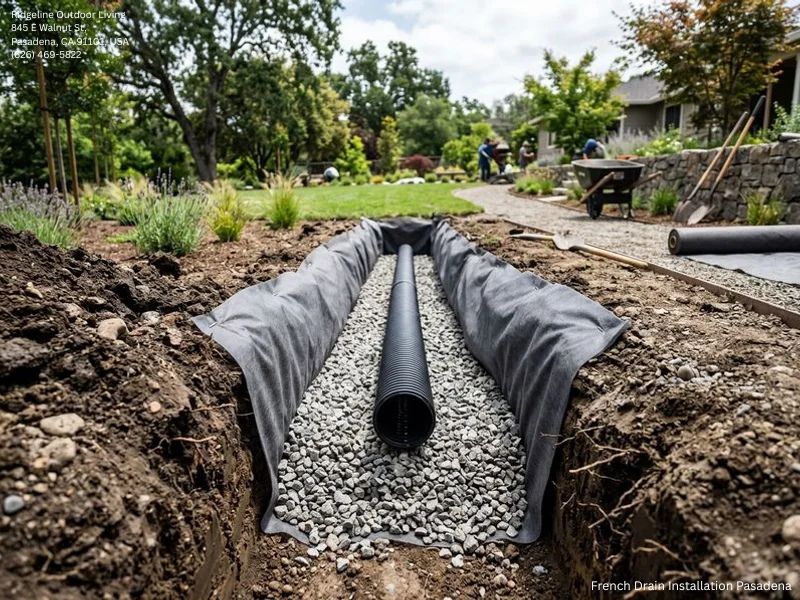
Water goes where gravity tells it to go. Around pools, the only good direction is away from structures and into controlled collection. Slot drains along the back edge of coping pick up splash and rain without breaking up sight lines. A well graded deck at 1 to 2 percent slope moves water without feeling tilted underfoot. Where decks meet planting, a french drain behind the curb captures runoff and sends it to an approved discharge point or a dry well. Many homeowners discover issues only after the first real storm. If you suspect problems, look to How to Solve Common Yard Drainage Problems, French Drains Explained: Protecting Your Property From Water Damage, and 10 Signs Your Yard Needs Better Drainage. Smart drainage lives under the design and keeps the pretty parts pretty.
Hillside properties merit special attention. Retaining walls do more than hold up a terrace. They route water, anchor rails, and create alcoves for equipment. Heights over a few feet may require engineering, permits, and specific waterproofing and drainage assemblies. On steep lots in Sherman Oaks and Brentwood, we often build terraced gardens below or above the pool with integrated stairs so that the space feels like a destination rather than a fortress. For deeper dives, Retaining Walls for Hillside Properties: What Homeowners Need to Know and The Complete Guide to Hillside Landscaping in Los Angeles cover the fundamentals that inform poolside choices.
Safety and code basics, the parts you do not see on Instagram
California’s Pool Safety Act sets baseline requirements for barriers on new or remodeled pools at single family homes. In practice, expect to provide multiple safety features such as a compliant enclosure with self-closing, self-latching gates, door alarms on the house when it forms part of the barrier, or an approved safety cover. Local jurisdictions can add layers, so permit drawings should show exact hardware, heights, and swing directions. We also specify non-breakable drinkware for pool zones and place hose bibs for quick rinse downs that prevent slick sunscreen buildup.
Electrical bonding, GFCI protection, and equipment clearances are not glamorous, but they prevent accidents and speed inspections. Underwater lighting must be listed for pool use and installed by a licensed contractor. For fire features, follow manufacturer clearances and keep ignition sources outside normal splash zones. Gas lines serving both a fire element and an outdoor kitchen need proper sizing, regulators, and shutoffs with accessible locations. These items never show on the mood board. They are the difference between an elegant project and an expensive headache.
How we approach layout and flow
After you choose a decking palette and plant vibe, the next decision is flow. Swimmers need a clear path from the house to the water. Spectators need shade and a place to set a glass. Kids need sightlines from wherever adults sit. The pool has a front stage and a back stage. The front stage is what you see from the main room of the house. It should hold the cleanest geometry and the best planting. The back stage hides the heater, filter, and electrical subpanel behind a wall that breathes and limits noise. We like to keep equipment at least 10 to 15 feet from primary seating and to enclose it with louvers or green screens that let air pass.
If you plan an outdoor kitchen, site it downwind of most seating so smoke drifts away. Align dining close to the kitchen, and keep the grill a few steps from the house to make plating easy without staining stucco. If you add a spa, place it close to a door so winter use feels convenient. In larger yards, a second node such as a pergola with a small fire element at the far end of the pool pulls people across the space and makes the yard feel grander. Those moves echo advice in 10 Ways to Create a Resort-Style Backyard at Home and 12 Outdoor Living Features That Add the Most Value. Flow is not decoration. It is comfort.
A quick pre-design checklist for Los Angeles homeowners
- Stand in the yard at 10 a.m., 2 p.m., and sunset to map sun, wind, and views. Decide which two or three activities matter most: laps, lounging, dining, or play. Pick a decking family that suits salt or chlorine and feels cool on bare feet. Identify where privacy is needed and where you want to keep vistas open. Confirm utility capacity and routes for gas, electric, and drainage before finalizing layout.
Budget ranges that match reality
Money follows materials and complexity. In Los Angeles, complete pool landscaping packages vary widely, but certain line items show consistent ranges when built by licensed pros with permits.
Decking in porcelain or high quality pavers typically runs $18 to $45 per square foot depending on base prep, cut complexity, and edge detailing. Natural stone can push to $30 to $70 per square foot. Coping, which requires more precision, often adds a premium. Planting packages for a typical pool yard with irrigation and low voltage lighting usually land between $15,000 and $45,000, assuming a mix of 5 and 15 gallon shrubs, a few boxed trees, and mulch. Landscape lighting around a pool, including path lights, wall lights, and transformer, tends to run $3,000 to $15,000 based on fixture count and brand. Custom steel or wood pergolas range from $8,000 for simple shade frames to $35,000 and up for larger covered structures with lighting and fans. Privacy fencing varies by material, but $120 to $250 per linear foot captures many wood and composite options.
Features add up. A compact water wall with two to three scuppers and tile accents can land in the $7,000 to $20,000 range. A linear fire feature with built-in seating often runs $6,000 to $18,000. If adding an adjacent outdoor kitchen, the earlier figures apply. This aligns with hardscape cost resources such as What Does Hardscape Construction Cost in Los Angeles? And 10 Hardscaping Features That Increase Property Value. Costs fluctuate with access, hillside conditions, and finish selections. The most reliable way to keep budgets sane is to lock design scope before demo starts and to leave a 10 to 15 percent contingency for surprises.
Sequencing and permitting, the quiet schedule killers
Even a modest pool refresh touches multiple trades and two or three inspections. Permits in Los Angeles can take 4 to 12 weeks depending on workload and whether you trigger plan check. Pool remodels that avoid structural changes often move faster, while new builds and retaining walls slow the process. We build time into the schedule for utility coordination, especially where gas meter upgrades or panel changes are needed.
Construction sequencing starts with utility planning and layout, then demolition, grading, and underground drainage. Hardscaping goes in next, followed by rough irrigation and lighting, then planting and final fixtures. We leave a window for plaster or pebble finish work before delicate plants arrive, to avoid dust and overspray. Communicating that order to clients keeps expectations clear. The design-build approach we use at Ridgeline Outdoor Living compresses handoffs and limits delays, a philosophy explained in How Ridgeline Outdoor Living Approaches Design-Build Landscaping and How Ridgeline Outdoor Living Creates Functional Outdoor Living Spaces.
Integrating the pool with the rest of the property
A pool sits inside a larger story: the driveway, the front walk, the side yard with bins, the dining terrace outside the kitchen. When we renovate a pool, we always ask what should change elsewhere. Maybe your driveway needs resurfacing. Perhaps you want to align stepping stones from the side gate to the pool house. Even a single material echoed front to back elevates the whole property, the sort of coordination you will see in 15 Driveway Paving Ideas to Improve Curb Appeal and The Most Popular Driveway Materials in Los Angeles. If water use is top of mind, integrate your project with 15 Water-Wise Landscaping Ideas for California Homes and Why Drought-Tolerant Landscaping Is a Smart Investment. Swapping a thirsty patch of grass for a shaded decomposed granite court with a low litter olive gives you a classic look that sips water and stands up to parties.
Common pitfalls we fix too often
We are often called to solve problems that should not have happened. The classics: decking too hot to use after noon, plants that choke a path within a year, lighting that blinds when reflected off water, and drainage that pushes deck grime into the pool. Another frequent issue is outdoor sound systems installed without regard for neighbors, which works against your privacy goals. We also see glass railings specified on windy ridges that demand constant cleaning and rattle on gusty nights. All of these are solvable with better selections and details at the front end, as covered in 10 Backyard Renovation Mistakes to Avoid.
One more pitfall worth naming is trying to cram every feature into a medium yard. You do not need a full kitchen, a fire lounge, a dining pavilion, and a daybed deck around a single 12 by 28 foot pool. Choose the two experiences you value most and give them room to breathe. The restraint pays you back every time you walk outside.
A quick material and feature comparison at a glance
- Porcelain pavers: cool underfoot, salt tolerant, low maintenance, modern look. Limestone or quartzite: elevated natural aesthetic, seal regularly, choose textured finishes for grip. Composite deck boards at water’s edge: comfortable, quick install, mind expansion gaps and heat. Synthetic turf near coping: clean edge, no clippings, confirm heat rating and drainage base. Slot drains and french drains: discreet control of splash and stormwater, critical on flat lots.
When your site is a hillside
Hillside pools are compelling, but they demand a different level of engineering and restraint. Cantilevered decks feel like sculpture, yet they require careful structural planning and waterproofing. Railings should be as transparent as code allows, but on view lots we favor slim steel pickets or tension systems over frameless glass because of cleaning and wind. Planting leans evergreen with deep roots and low mass to reduce fire load and erosion. Retaining walls should be designed for both soil and surcharge, which means thinking about the hot tub and the dinner party your wall will support in five years. Guides like The Complete Guide to Hillside Landscaping in Los Angeles and How Retaining Walls Prevent Erosion on Hillside Properties explain the skeleton that allows the glamour to stand.
Tying it all together for daily use
A pool landscape earns its keep on ordinary Tuesdays. Put hooks near the outdoor shower so towels have a home. Place umbrella sleeves flush in the deck where you actually need shade at 3 p.m. In August, not where they fit the first day. Add a strip of synthetic turf or a ribbed mat outside the pool steps so you are not tracking grit into the house. Program your lighting scenes and leave a remote near the seating. Add a covered bin tucked in a seat wall for pool toys. These are simple touches. They make the space feel finished.
When you are ready to act, bring a clear brief to your first design meeting: what you want to feel and what you can spend. Ask smart questions like those in 10 Questions to Ask Before Hiring a Landscape Contractor. You do not need to have every answer. You just need a partner who listens, translates your lifestyle into a plan, and manages details from the first stake in the ground to the last pool skimmer basket. That is where projects move from a list of features to a cohesive outdoor room, and where a Los Angeles backyard becomes the best part of home.