Outdoor kitchens in Los Angeles no longer play second fiddle to the indoor chef’s domain. They are fully realized rooms, designed with the same rigor as a custom interior, then tuned to the microclimate of a particular yard in Brentwood, Silver Lake, or the South Bay. At Ridgeline Outdoor Living, our team designs and builds these spaces weekly, working across hillsides, narrow lots, coastal zones, and heat pockets in the Valley. The result is a clear picture of what is working for homeowners right now, and where to invest for a decade of reliable use.
Below is a field-tested look at trends that are gaining traction, what they cost in Los Angeles, and the practical decisions that separate showpieces from workhorse kitchens.
The LA Setting Shapes Every Decision
Los Angeles is a patchwork of microclimates with distinct code jurisdictions, soil conditions, and wind patterns. A kitchen that works beautifully in Cheviot Hills may miss the mark in Topanga or Manhattan Beach. Three factors shape our early design decisions.
First, sun and shade. Most of our clients cook between 4 pm and 8 pm. Western exposure becomes the enemy without adjustable shade, so we orient grills and prep zones to keep the cook out of the low sun. Second, wind. Prevailing afternoon winds along the coast and canyon gusts can push smoke and reduce grill performance. We account for wind direction when placing hood vents, splash walls, and seating. Third, slope and drainage. On hillside lots we build in micro-retaining and discreet channel drains so the kitchen stays dry during a rare but intense storm. Poor drainage is the fastest way to shorten the life of cabinets and appliances.
Layouts That Cook as Well as They Entertain
Los Angeles homeowners want kitchens that host comfortably yet keep the workflow tight. Four layouts dominate our projects.
The galley run is ideal for narrow side yards or modern minimalists. A straight counter along a wall or fence line allows a grill, refrigeration drawer, and sink in a compact footprint. We often pair this with a small perpendicular bar for a couple of counter stools.
The L shape creates a natural separation between cooking and serving. This is our go-to on medium patios. One leg houses the hot zone - grill, side burner, plancha - and the other keeps cold storage and prep out of the heat. Guests face the inner corner, which encourages conversation without crowding the cook.
Business Name: Ridgeline Outdoor Living
Address: 845 E Walnut St, Pasadena, CA 91101, United States
Phone: (626) 469-5822
Ridgeline Outdoor Living
Ridgeline Outdoor Living is a Pasadena-based landscape design-build company serving Greater Los Angeles with custom outdoor living, hardscape, and drought-tolerant landscape solutions. The company specializes in patios, retaining walls, outdoor kitchens, drainage, hillside projects, and turnkey landscape construction, handling projects from design and permitting through final build and warranty.
845 E Walnut St, Pasadena, CA 91101, USA
Business Hours:
- Monday – Saturday: 8:00 AM – 6:00 PM
- Sunday: Closed
Follow Us:
The U shape or peninsula suits larger yards and families that love to gather. It sets a central island for prep and pickup, with seating on the public side and a clear work triangle on the private side. Add a cantilevered counter for knees and you have true dining seating without table clutter.
affordable hardscaping PasadenaSatellite islands have surged, driven by clients who entertain at scale. Instead of one big block, we break the program into a cooking pod, a bar pod, and a dedicated pizza pod, then tie them with paving or a low wall. The separation reduces crowding and invites movement across the yard.
Finishes That Hold Up to Sun, Salt, and Smoke
Materials in LA face UV intensity, coastal salt, and thermal cycling. The finishes trending this year lean contemporary but prioritize durability.
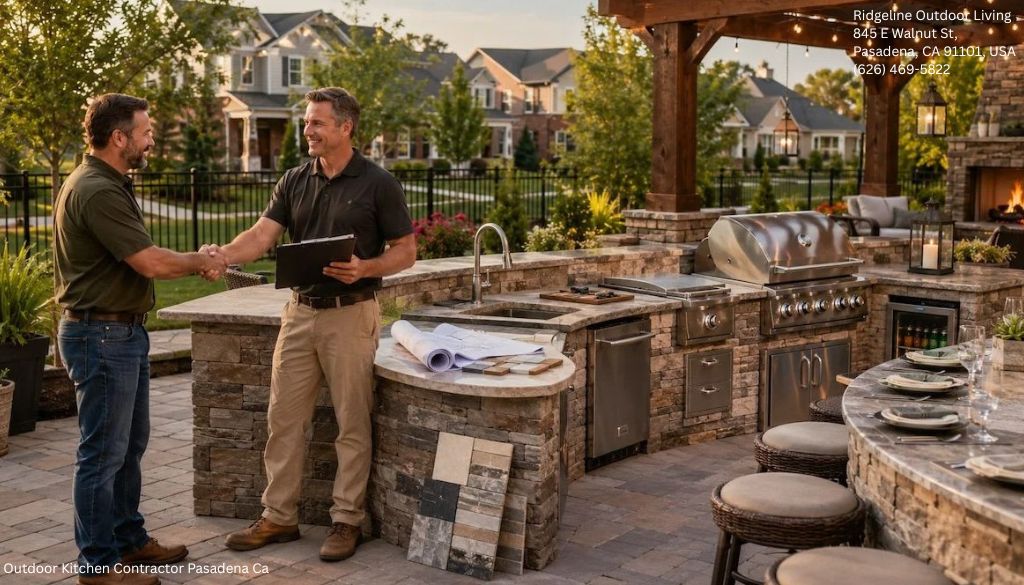
Porcelain slab counters are our workhorse. They resist UV, staining from oils and citrus, and thermal shock. When a client insists on concrete, we specify a high-density mix with a penetrating sealer and accept the hairline patina as part of the look. For extremely sleek designs, sintered stone like Dekton performs well in heat and sun with minimal maintenance.
Cabinetry is trending toward powder-coated aluminum frames with integrated weather seals. They handle coastal air better than powder-coated steel. Where clients love the warmth of wood, we use ipe or thermally modified ash for accents and doors rather than full carcasses, and we design vented backs to let the boxes breathe.
For decking and patios adjacent to kitchens, we are installing large-format porcelain pavers on pedestals more often than poured slab. They offer clean lines, quick drainage, and easy access for future utilities. For clients who prefer texture, we specify permeable pavers that echo the house palette and reduce runoff. This dovetails with broader conversations about Paver Patios vs Stamped Concrete: Pros and Cons. Stamped concrete can be budget friendly on large surfaces, but it can fade and telegraph cracks on expansive patios. Pavers cost more per square foot but allow controlled movement and repairs without tearing out an entire surface. Many of our 15 Paver Patio Designs Los Angeles Homeowners Love incorporate subtle border bands, herringbone fields, and inlays that define the kitchen zone without walls.
Appliances With Range and Restraint
Outdoor equipment options have exploded, but the best kitchens focus on a core set that will see weekly use. The backbone remains a high quality gas grill, typically 36 to 42 inches wide, capable of both searing and low, indirect work. Many clients add a ceramic kamado for smoking and baking, or an Argentine-style parrilla when live fire is central to their cooking. Flat-top griddles are on the rise for breakfast, tacos, and vegetables, but we often specify them as integrated plates within a premium grill to save space.
Pizza ovens continue to dominate, but scale matters. A compact, fast-heating gas model sees more weekday use than a massive wood oven. We build both, and still love wood for weekend rituals, but we counsel clients to be honest about their habits. For entertaining and drinks, a shallow beverage chiller paired with a single outdoor-rated refrigerator drawer is beating full under-counter fridges, which can become energy hogs with limited utility.
Side burners are worth it if you cook sides and sauces outdoors, less so if the grill includes a power burner. Trash and recycling pullouts, paper towel cubbies, and tool drawers make the daily difference. Warming drawers sound luxurious but rarely earn their keep unless you host large groups routinely.
Ventilation and Safety With Real-World Nuance
Many open-air kitchens ignore ventilation until a neighbor complains or a soffit gets smoke stained. In LA, a vent hood is smart wherever a grill sits under any roof plane, pergola louver, or low tree canopy. For built-in gas fire features or grills in wind-prone areas, we specify side and rear vents in the masonry to dissipate gas. Clearances vary by manufacturer, but a good rule is 8 to 10 inches behind, 6 inches below, and 1 to 2 inches along sides for air circulation inside cabinets. GFCI outlets, stainless steel gas flex lines rated for outdoor use, and shutoff valves within 6 feet of the appliance are non-negotiables.
We also evaluate wildfire risk in hillside zones. When appropriate, we steer clients toward gas fire features with CSA certification and glass or stone media, rather than open wood pits, and we integrate ember-resistant covers. This meshes with experience from our projects inspired by 12 Backyard Fire Pit Ideas for Entertaining Year-Round. The fire must look beautiful, start easily, and shut down safely.
Shade Structures: Pergolas vs Covered Patios
Shade dictates usability. Two structures dominate our builds. Pergolas, especially motorized louvered systems in powder-coated aluminum, adjust for sun, smoke, and rain. They integrate recessed lighting, heaters, and screens cleanly. Covered patios, framed and roofed to match the house, deliver full weather protection and stronger architectural continuity, but they trigger more permitting and sometimes stricter setbacks. Pergolas typically install faster and produce less load on footings, a benefit on marginal soils or post-tension slabs.
Clients often ask which is right. If you want flexible shade over a cooking zone with occasional rain performance, choose a louvered pergola. If you plan outdoor media, year-round dining, and full soffit-level integration of fans, speakers, and fire sprinklers where required, a covered patio wins. Our piece on Pergolas vs Covered Patios: Which Is Right for Your Home? Walks through more detail, but the short answer is to pair the structure to your usage window and the jurisdiction.
Lighting That Works Four Ways
Outdoor kitchens need task, ambient, accent, and safety lighting. We layer low-glare task fixtures under counters and hoods, then add dimmable ambient downlighting from the pergola or overhead eaves. Subtle accent lights under bar overhangs and along low walls add depth, while step lights and path fixtures maintain safe movement. Builders sometimes overlight with cool color temperatures that flatten the scene. We stay in the 2700 to 3000 Kelvin range outdoors, avoiding the common errors from 10 Outdoor Lighting Mistakes That Reduce Curb Appeal, and we integrate control zones so the cook can light the grill without flooding the whole yard. For ideas across a property, see 10 Outdoor Lighting Ideas for Los Angeles Landscapes.
Fire Features That Invite Gathering
Linear gas fire tables along the outer edge of a bar are a hit this year, not for heat but for focus. Bowl features at low seating groups still work beautifully, provided wind screens keep flames stable. If you prefer a wood experience, we add a dedicated pad with a spark screen, situate it away from trees and structures, and confirm local restrictions. Many clients now select hybrid fire pits that accept both gas and occasional wood with a conversion kit, though not every jurisdiction allows dual-use.
Water, Plants, and a Dry Climate
No Los Angeles outdoor room feels right without landscape. Drought tolerance frames these decisions, and homeowners are more sophisticated about water-wise design than a decade ago. We soften the hard edges of kitchens with native and Mediterranean plants, set in hydro-zoned beds with drip irrigation. Silver-blue foliage, sages, manzanita, rosemary standards, and grasses hold structure year round. The Best Drought-Tolerant Plants for Los Angeles Yards pair well with the restrained lines of contemporary hardscape.
Artificial Turf vs Sod: What’s Best for Los Angeles Homes? Remains a live question. Turf delivers reliable green with near-zero irrigation, but it radiates heat in full sun and benefits from shade or light colors nearby. High quality sod looks and feels better underfoot, but water budgets and shade patterns must support it. Many of our clients choose a hybrid strategy: a turf play area in shade and water-wise groundcovers or gravel elsewhere. If you are transforming a full yard, The Ultimate Guide to Drought-Tolerant Landscaping in Los Angeles outlines design and plant strategies that fit a modern outdoor kitchen.
Hardscape That Adds Value and Handles Weather
Hardscape is the stage for the kitchen. Permeable pavers, porcelain on pedestals, and reinforced concrete with saw-cut joints all perform well when properly drained. We avoid large, uninterrupted concrete pads on expansive yards because they crack and dominate visually. Instead, we break masses into fields and borders that echo the geometry of the house. This approach is consistent with 10 Hardscaping Features That Increase Property Value, and we see appraisal benefits from well-detailed outdoor rooms with integrated seat walls, lighting, and defined circulation.
Driveways often enter the picture when we upgrade a front approach to match a backyard investment. If you are looking at curb appeal holistically, The Most Popular Driveway Materials in Los Angeles and 15 Driveway Paving Ideas to Improve Curb Appeal offer pattern and material inspiration that carry through to the backyard palette without feeling matchy.
Hillsides, Retaining, and Drainage You Do Not See
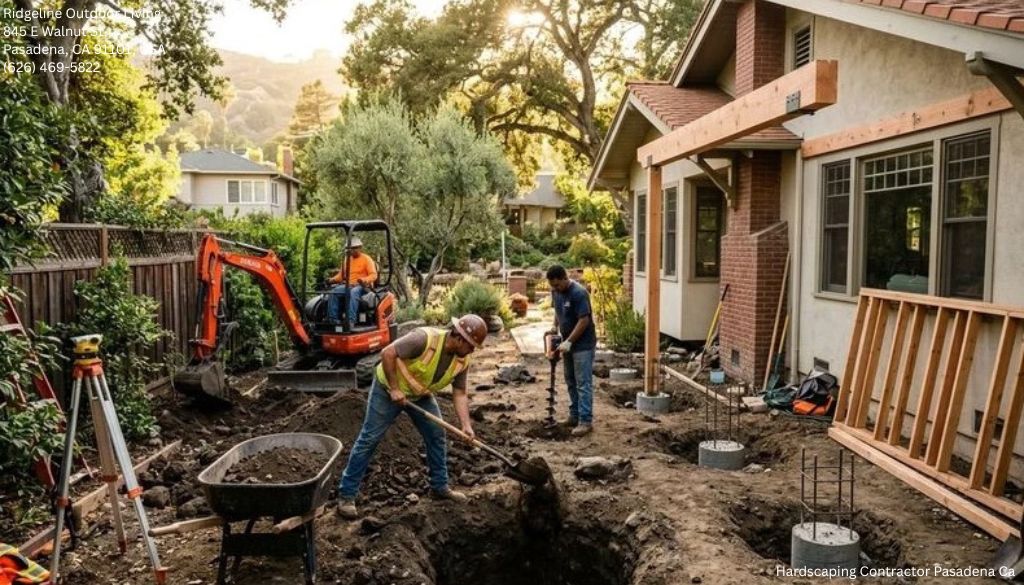
On sloped properties, an outdoor kitchen requires discreet structural moves. Low retaining walls level the pad and act as seat backs. We engineer these walls for lateral loads, tie them to micro-piers when soils dictate, and detail weep holes or perforated drains behind them. Retaining Walls for Hillside Properties: What Homeowners Need to Know remains essential reading, and our The Complete Guide to Retaining Walls in Los Angeles goes deeper into geotechnical steps and inspections.
Surface water and subsurface water both matter. French Drains Explained: Protecting Your Property From Water Damage summarizes the principle. In practice, we place narrow channel drains along the back edge of counters and at patio transitions, then route to a sump or daylight outlet per code. How to Solve Common Yard Drainage Problems and 10 Signs Your Yard Needs Better Drainage both come alive when you cook for the first time in a heavy rain and your floor is dry.
Smart Controls, Heaters, and Entertainment
Outdoor AV matured to the point where it should feel invisible until you need it. We recess weatherproof speakers into pergola beams and use outdoor-rated displays on articulating mounts only where sightlines demand. Infrared or gas radiant heaters extend the season without blasting a single hotspot. We tie lighting, heaters, and water features into a simple control system, often app based but with manual scene controls next to the bar. The goal is one tap to cook, one tap to dine, one tap to close.
What an Outdoor Kitchen Costs in Los Angeles
Costs vary by slope, access, size, and specifications, but after hundreds of builds we can give solid ranges.
A compact, straight-run kitchen at 10 to 12 feet with a quality 36 inch grill, under-counter fridge drawer, sink, porcelain counter, and aluminum cabinetry typically starts around 28,000 to 40,000 dollars, installed. Add utility trenching across longer runs or jackhammering in older slabs and you may see another 4,000 to 8,000 dollars.
An L or U shaped kitchen with 18 to 24 linear feet of counter, upgraded grill, side burner or plancha, ice drawer, trash pullout, task lighting, and a louvered pergola above often lands between 55,000 and 95,000 dollars, depending on the pergola brand and whether footings must avoid utilities.
High end, multi-station kitchens with pizza oven, refrigeration suite, warming drawer, custom steel or stucco cladding, integrated seating walls, and a full smart control and lighting package can range from 120,000 to 250,000 dollars, especially when accompanied by new hardscape, gas service upgrades, and drainage improvements. If you want a sense of broader yard planning, 10 Backyard Upgrades Worth the Investment gives perspective on where outdoor dollars return both lifestyle and value.
Permits and engineering may add 2,000 to 12,000 dollars, more if we tie into a covered patio with structural work. The question How Much Does an Outdoor Kitchen Cost in Los Angeles? Comes up early, and these ranges reflect current labor and material pricing we are seeing landscaping guides across the county.
A Practical Pre-Build Checklist
- Map sun, wind, and neighbor sightlines during your typical cooking hours. Decide your weekly cooking kit, not your fantasy weekend kit. Confirm gas and electrical capacities before finalizing appliances. Choose shade strategy first, then shape the kitchen under it. Plan drainage paths and hose spigots so cleanup is easy.
Outdoor Kitchen Features Worth the Upgrade
- A motorized louvered pergola with dimmable lighting and heaters. Porcelain slab counters with integrated backsplash and fascia panels. A dual fuel setup, pairing a gas grill with a compact ceramic smoker. Refrigeration drawer plus shallow beverage chiller instead of a full fridge. Permeable or pedestal-set pavers to simplify future utility access.
Cases From the Field
A compact hillside in Eagle Rock had a narrow perch facing west. The clients wanted pizza nights and weekday grilling without losing the sunset. We tucked a 12 foot galley kitchen along the uphill retaining wall, set a 36 inch grill with an integrated plancha, and installed a gas pizza oven with a low-height flue that directed heat away from an overhanging jacaranda. A slim louvered pergola let light in during the morning and shaded the cook in the evening. Porcelain pavers on pedestals leveled the surface and hid a shallow drain that carried stormwater to a curb outlet. Total construction took six weeks. They now cook three nights a week, and the small footprint invites rather than dominates.
In Manhattan Beach, a modern home needed a large social hub that would not feel heavy against the minimalist architecture. We split the program into a cooking island with a 42 inch grill and side burner, a separate bar island with a beverage center and ice drawer, and a linear fire table a few steps away for after dinner. Both islands sat under a wide louvered pergola set to spill smoke away from neighboring windows. Lighting scenes shifted from task to dinner to movie mode. Planting used drought tolerant textures and a small recirculating water feature that masked street noise, a nod to 12 Water Feature Ideas for Luxury Los Angeles Backyards. The owners entertain 12 to 18 guests comfortably, and the open flow keeps everyone moving.
Maintenance, Lifespan, and Small Habits That Matter
Outdoor kitchens last when owners follow a few rituals. Cover grills after each weekend, wipe porcelain counters with mild soap, and rinse burners quarterly to remove salts and oils. Once a year, check gas connections, re-seal concrete if used, and clean hood filters. Keep plantings trimmed back to allow air circulation around cabinets. Where the yard uses artificial turf, hose the immediate cooking area after heavy sessions to reduce heat buildup and odors. If you opted for sod, mind overspray and fertilizers near stainless surfaces. Simple habits prolong finishes and keep appliances performing at their rated heat.
How Ridgeline Approaches Design-Build
Ridgeline Outdoor Living’s Guide to Outdoor Kitchen Design hinges on a simple path. We start with a site study and a short interview about how you like to cook and host. We sketch two or three layout options with sun paths and wind roses, then align material and appliance choices to that flow. Our construction drawings document gas line sizing, GFCI placement, clearances, and drainage slopes. During build, our crews protect existing surfaces, trench utilities with minimal disruption, and pre-assemble cabinetry to shorten site time. The punch list focuses on lighting scenes, appliance calibration, and client walkthroughs, not catch-up construction. This is how Ridgeline Outdoor Living Creates Functional Outdoor Living Spaces that look elegant without sacrificing day-to-day usability.
Where Trends Meet Good Judgment
Trends are helpful, but the best outdoor kitchens reflect the home and the people who use them. In Los Angeles, that means anticipating wind, respecting drought, shaping light, and building for earthquakes and storms that may be rare but come with force. Thoughtful hardscape ties the room to the site. Smart shade makes the space comfortable in August and December. Appliances earn their footprint. Drainage stays quiet and effective. When the decisions align, the kitchen dissolves the line between indoors and out, which is exactly what Angelenos prize.
If you are weighing options or timing, consider the broader yard at the same time as the kitchen. 10 Outdoor Living Ideas Transforming Los Angeles Backyards and 12 Outdoor Living Features That Add the Most Value can help you think through phases. Whether you are refining a narrow side yard or developing a full hillside retreat, the right outdoor kitchen gives the yard a heartbeat and a place to gather that feels inevitable, like it was always meant to be there.