Southern California soil and sun reward smart choices. A patio that performs in Portland can crack in Pasadena. A driveway that dazzles in Miami can rattle loose on a San Diego hillside. After years building outdoor spaces from Santa Monica to Pasadena and down through Orange County, I have learned that the best hardscape materials here share a few traits: they handle heat, shrug off UV, respect slope and drainage, and still look inviting at golden hour.
This guide walks through the materials that consistently prove themselves across Los Angeles and its neighbors, along with the trade-offs, costs, and small details that determine whether a space feels refined five years in or tired after the first summer. If you are weighing Paver Patios vs Stamped Concrete: Pros and Cons, or evaluating What Does Hardscape Construction Cost in Los Angeles?, you will find practical numbers and field notes woven throughout.
Climate pressure points that shape material choices
Most of coastal and basin Los Angeles sits in a Mediterranean climate with minimal freeze-thaw cycles. That helps. The real stressors are summer heat spikes, relentless UV, long drought stretches punctuated by intense downpours, patchy expansive clays, and slope. In canyon and foothill zones, wildfire embers are a reality. Near the beach, salt air corrodes fasteners and can etch some stones.
These forces mean two things. First, choose surfaces that do not soften, shatter, or bleach out under strong sun. Second, think like water. Plan for infiltration where you can, and capture or redirect the rest, whether that means permeable pavers, dry wells, or French Drains Explained: Protecting Your Property From Water Damage. Good drainage does not just protect foundations, it extends the life of hardscape.
Concrete pavers: the Southern California workhorse
If I could specify only one material for patios and driveways across Los Angeles, it would be concrete pavers. They suit our soils and sun, and they age predictably. Interlocking pavers sit on a compacted base with sand bedding, so they move slightly with the ground instead of cracking like a monolithic slab. If a pocket settles, you can lift and re-level.
Good manufacturers cure pavers to 8,000 psi or higher, which outperforms most site-poured concrete. Color is integral, not painted on, so UV fades are gradual. Textures range from tumbled to contemporary smooth, and formats span from 4 by 8 herringbone bricks to oversized 24 by 36 rectangles. On driveways, a standard thickness is 60 mm, while heavy-duty 80 mm makes sense for RV loads or steep approaches.
Permeable pavers are worth a look where city LID rules require infiltration or where a slope funnels water toward a garage. They look nearly identical to standard pavers but rely on open-graded joints and base rock that temporarily stores stormwater. On a Brentwood remodel, we replaced a cracked concrete drive with permeable pavers and solved a chronic puddling problem in one move.
Typical installed cost across Los Angeles County runs from about $18 to $30 per square foot for patios with standard pavers and straightforward access. Driveways with thicker units, more cuts, or complex borders often land between $22 and $40 per square foot. The low number creeps up with demolition, tight side yards, long wheelbarrow runs, or a new base in expansive clay. Compared with The Most Popular Driveway Materials in Los Angeles, pavers cost more than basic brushed concrete but less than most high-end natural stone.
Maintenance is simple. Sweep, blow, and rinse. Re-sand joints every few years if needed. Optional sealing slows color softening and blocks oil penetration on driveways, but it is not mandatory. Expect a couple of joint weeds if irrigation drifts, and deal with them quickly.
Porcelain pavers: contemporary lines with low upkeep
Porcelain pavers have moved from design magazines into real projects because they solve a handful of Southern California problems at once. They are non-porous, so they resist stains from barbecue drips and oil around Outdoor Kitchen Trends Los Angeles Homeowners Are Choosing. They shrug off salt air and pool chemicals. Their density means they barely fade, even on a south-facing pool deck.
We use 2 cm thick porcelain pavers on pedestals over waterproofed decks and 3 cm pavers on sand set patios. Manufacturers offer stone looks that read convincingly at a few feet, as well as concrete and wood effects without the heat or rot. Around pools, select a slip resistance rating adequate for bare feet; the landscaping guides better lines publish detailed DCOF values.
The caution is heat. Dark porcelain can get hot. In Woodland Hills, we swapped a client’s preferred charcoal for a light shell tone after a test patch hit uncomfortable temperatures at 3 pm in August. Another point: cuts must be crisp. Plan layout to minimize small slivers along edges that can look busy.
Expect $28 to $55 per square foot installed for sand set porcelain in Los Angeles, with pedestals and rooftop installs running higher. That price flips the usual calculus: porcelain can outperform some natural stones in cost control, especially where you want large-format sizes without the breakage waste stone sometimes brings.
Natural stone: timeless materials that demand respect
Stone still sets the high bar for character. The question is which species and finish behave best in our region. Here is the short version of a long career’s worth of trial and error.
Travertine brings a soft palette, feels gentle underfoot, and stays cooler than dark stones. It performs well in Level 2 or better grade with filled and honed finishes for patios and pool decks. We vet shipments carefully to avoid excessive voids. In Studio City, a lightly tumbled ivory travertine deck has looked elegant through seven summers with only one reseal.
Limestone splits into winners and watch outs. Dense limestones like some Portuguese and Israeli varieties wear beautifully. Softer or highly fossilized limestones can etch under acidic cleaners and darken with oils. Indoors that can be managed, outside near a grill it becomes a headache. Get samples wet, oil them, and leave them in the sun for a week before committing.
Quartzite is an all-star for coping and steps. It resists scratching, fights heat, and shines with subtle sparkle in evening light. Flamed or lightly textured finishes add traction. We built a hillside stair in La Cañada using gray-green quartzite treads over concrete block risers, and those steps have taken daily dog traffic without a nick.
Granite is durable but can feel busy in patterned patios. I favor it for cap stones or in modern projects where a tight-grained, dark surface suits the palette. Sandblasted or leathered finishes tame glare and offer traction.
Sandstone is more variable and often better suited to garden accents and walls than high-traffic patios in our dry heat. It can exfoliate if the bedding planes are horizontal to weather.
Stone cost swings widely, from $25 to $90 per square foot installed for most patios, and north of that for complex settings, large sizes, or heavy structural bases. On slopes, keep in mind that dry-laid stone still needs a properly engineered base, and that Retaining Walls for Hillside Properties: What Homeowners Need to Know often leads to masoned CMU cores with stone veneer for stability.
Poured concrete and stamped finishes: budget friendly but unforgiving
Monolithic concrete offers clean geometry and a predictable price, especially on larger patios. It is also the least forgiving if the subgrade moves or tree roots push up. Joints help, but I tell clients plainly: in our climate and soils, concrete will crack. The goal is to control where.
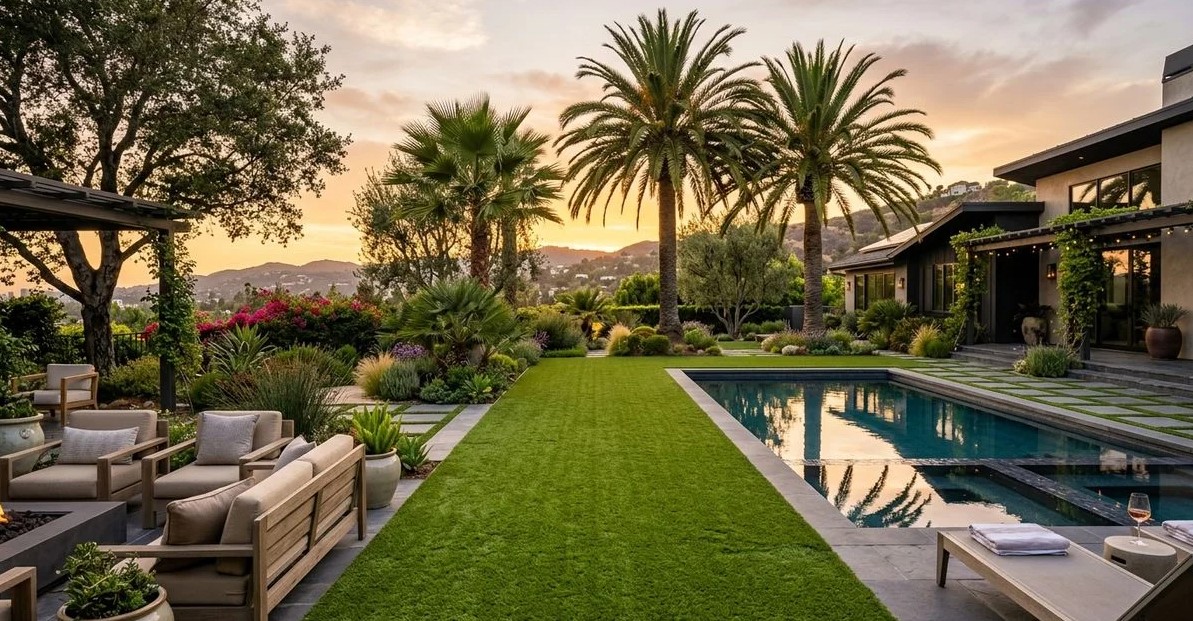
For modern projects, we often specify 4 inch slabs at 3,000 to 3,500 psi with microfibers, #3 rebar on 18 inch centers each way, and well compacted base. A light sandblast or acid wash adds texture. Color can be integral or added as a dust-on hardener; integral is more consistent in sun.
Stamped concrete can mimic stone patterns at a lower cost, though connoisseurs will spot the repeat. In Sherman Oaks, a homeowner wanted the look of slate on a modest budget. We used a subtle skin stamp and two-release color system to tone down the faux effect and cut a randomized joint pattern that echoed natural clefts. It reads well from the kitchen and performs fine under outdoor dining.
Installed costs for standard broom-finish concrete range roughly from $12 to $18 per square foot in Los Angeles. Add $3 to $8 for color and light texture, and $8 to $15 for full stamping with pattern release and sealing. Repairs are patchy, literally. That is where pavers win in long-term aesthetics.
Decomposed granite and gravel: casual, permeable, and honest
When a client asks for a relaxed garden path or a budget-friendly patio that breathes, I often reach for decomposed granite, known locally as DG. Properly installed with a stabilized binder, DG firms up enough to roll a cart across while letting rain infiltrate. It pairs beautifully with The Ultimate Guide to Drought-Tolerant Landscaping in Los Angeles because the edges feather into planting beds without a hard curb.
Color ranges from warm golds to grays. Expect dust in the first weeks unless you choose a higher-binder mix. Raking and top-up every couple of years keep it fresh. I avoid DG under dining chairs with skinny legs, and near pools where tracking fines onto wet decks becomes a slip risk.
Gravel, whether pea or crushed, adds a crisp texture and excels in utility zones and contemporary gardens. Use edging to contain it, lay a compacted base below, and choose angular stone over round for less migration. In beach communities, we have used crushed black basalt to add punch to small courtyards, with stepping pads to stabilize walking.
Costs are friendly, usually $8 to $18 per square foot installed for DG paths and terraces depending on binder and edging, and similar numbers for gravel areas. Durability depends heavily on foot traffic, irrigation overspray, and whether guests drag chair legs rather than lift them.
Composite and hardwood decking: warmth without worry
Decks are a different animal from masonry, but they often anchor hillside living where patios are hard to place. Composite decking solves two Southern California concerns at once: it resists UV and requires little maintenance. Go with a higher-end cap stock product to avoid early fading. In Manhattan Beach, a taupe composite stayed nearly true through five summers, even with salt air.
Hardwood still has a place. Ipe and garapa wear beautifully if owners accept periodic oiling or let them silver. On shaded canyons, composite can mildew, and hardwood’s natural oils fight that. At the coast, use stainless screws and hidden fasteners rated for salt exposure. Any deck near the wildland urban interface should consider ember-resistant details and non-combustible borders around fire features.
Deck pricing varies widely with structure. Surface materials range roughly from $18 to $45 per square foot installed for basic composites, and $28 to $55 for hardwood, while the frame, footings, and railings often double those numbers. On hillsides, engineering and helical piers can add significant cost but also unlock views and circulation that ground-level yards cannot.
Walls, steps, and the bones of the landscape
Great outdoor rooms depend on structure you rarely notice. In Los Angeles, the humble concrete masonry unit, or CMU, reinforced and filled, remains the backbone for tall garden walls, seat walls, and planters. It takes stucco, smooth plaster, or stone veneer depending on style. We often use split-faced Pasadena hardscaping CMU for utility walls behind planting where budget matters.
Segmental retaining wall systems from manufacturers like Allan Block and Versa-Lok shine for mid-height terraces. They are engineered, modular, and move with soils better than rigid poured walls. Over 4 feet of exposed height, count on permits and engineering. Anyone selling you a tall wall without them is selling you a future problem. On small slopes, timber lagging or boulder walls can work, but be honest about longevity and aesthetics next to a modern home.
For steps, we commonly blend poured concrete stringers with stone or porcelain tread caps. That hybrid approach keeps costs measured while giving you the tactile quality underfoot. A 6 inch rise with an 11 to 14 inch tread suits most gardens here, especially when paired with 10 Outdoor Lighting Ideas for Los Angeles Landscapes to make evening navigation comfortable.
Around pools: slip, heat, and chemical durability
Pools ask the most of materials. The deck should not fry bare feet, it must handle wet-dry cycles without spalling, and it should resist chemical drift. Light colored travertine, porcelain with slip rating above 0.60 DCOF when wet, and textured concrete hold up best. We have moved away from smooth marble outdoors except in shaded courtyards, as it can be slick and hot.
Copings want rounded or eased edges. Mitered porcelain looks elegant but needs an experienced setter. For grout, choose color consistent sanded urethane or epoxy blends that handle pool splash. Plan deck drainage carefully so rinse water moves to slot drains or lawn rather than back to the waterline tile.
If you are Designing the Perfect Outdoor Dining Space near a pool, separate grease-prone grill zones from splash areas. Sealer on natural stone is your friend, but it is not a force field. Wipe spills quickly.
Fire features and ember considerations
Gas fire pits and outdoor fireplaces live happily on pavers, porcelain, concrete, and most stones. Wood-burning is restricted in many Los Angeles neighborhoods, so confirm local rules. Materials around flame should be non-combustible. I avoid soft limestones that can pop when heated. Keep at least 18 inches of non-combustible surface around a fire pit center.
Tumbled concrete pavers survive errant embers better than synthetic turf. If you crave a lounge sunken into a lawn, consider a framed hardscape pad for the fire feature, with turf pulled back several feet. For inspiration, 12 Backyard Fire Pit Ideas for Entertaining Year-Round often start with a simple gas bowl and a circular seat wall, then scale into linear burners with wind guards in breezier canyons.
Driveways that survive turning tires
Two details decide driveway success more than the material itself: base prep and joint layout. On slopes or curves where cars scuff, concrete can wear through hardeners to the base color. Pavers handle point loads and tire twist better. Porcelain is legal for light residential driveways in thicker formats, but I still prefer concrete pavers at 80 mm on significant slopes.
Add decorative borders or bands to break up spans and to cue parking alignment. In Encino, we mixed a field of charcoal pavers with a lighter soldier course to guide guests visually. If you want texture without busyness, consider oversize pavers set in a running bond that narrows toward the street, which flatters curb appeal and fits neatly with 15 Driveway Paving Ideas to Improve Curb Appeal.
Oil drips happen. Seal driveways or specify pavers with factory-applied sealers, and keep a degreaser on hand. When a client in Westchester called about a transmission leak, we lifted four pavers, replaced the bedding sand, and reinstalled them in under an hour. You cannot do that with concrete.
Turf, planting, and the edge conditions that make hardscape sing
Hardscape rarely stands alone. It frames garden beds, meets turf, and lines the base of walls and fences. These transitions determine whether a yard feels integrated or stitched together. We often recommend a narrow gravel or groundcover strip between paving and stucco walls to avoid splash staining. Against fences, a planting pocket softens the line and improves drainage.
Artificial Turf vs Sod: What’s Best for Los Angeles Homes? Is more than a water question. In full sun beside a porcelain deck, many artificial turfs run hot. Natural sod breathes but demands water. If you choose synthetic, pick a cooler fiber and plan shade or a misting line where kids play in August. If you choose sod, Bermuda or hybrid warm-season grasses handle heat better and pair well with The Best Drought-Tolerant Plants for Los Angeles Yards in adjacent beds.
Costs in context and where to spend
Homeowners often start with a single number for a patio or driveway, then discover the extras: access, demo, grading, site drainage, gas lines for fire features, and low-voltage power for lights. A sober budget frame helps you prioritize. On many projects we build in phases: core patios and paths first, then a pergola and an outdoor kitchen once the bones prove themselves. If you are asking How Much Does an Outdoor Kitchen Cost in Los Angeles?, quality gas grills with stone or porcelain counters commonly land between $18,000 and $45,000, with premium appliances pushing higher.
As a rule, spend on the foundation and drainage you will never see, then on surfaces you touch every day. Save on accent pieces you can add later. The result is a space that performs now and evolves gracefully. That judgment applies across 10 Hardscaping Features That Increase Property Value and to the small moves that nudge an appraisal, like a clean driveway, defined entries, and lighting that makes architecture pop.
A quick, practical checklist for choosing materials
- Confirm how the space will be used most: dining, lounging, play, or parking, then match traction and stain resistance to that use. Test heat on sample pieces in the afternoon sun, especially for pool decks and south exposures. Map drainage routes before finalizing surfaces, including where gutters discharge and how a French drain or permeable field may help. Balance maintenance comfort: sealed stone beauty versus porcelain simplicity, paver re-leveling ease versus concrete monolith efficiency. Check local rules for wildfire zones, driveway slopes, and retaining wall permits, particularly on hillside properties.
Drainage and the invisible infrastructure
A beautiful surface fails if water has nowhere to go. The clay pockets in many Los Angeles neighborhoods shed water rather than drink it. Combine that with downpours that now arrive in bursts and you get flooded planters and lifted pavers. We address this with several strategies: permeable fields under patios where soils allow, trench or slot drains tied to sump pumps where they do not, and French drains that intercept uphill flows. On a Hancock Park yard, a discreet channel at the patio’s back edge kept water out of the basement during a once-in-a-decade storm.
Business Name: Ridgeline Outdoor Living
Address: 845 E Walnut St, Pasadena, CA 91101, United States
Phone: (626) 469-5822
Ridgeline Outdoor Living
Ridgeline Outdoor Living is a Pasadena-based landscape design-build company serving Greater Los Angeles with custom outdoor living, hardscape, and drought-tolerant landscape solutions. The company specializes in patios, retaining walls, outdoor kitchens, drainage, hillside projects, and turnkey landscape construction, handling projects from design and permitting through final build and warranty.
845 E Walnut St, Pasadena, CA 91101, USA
Business Hours:
- Monday – Saturday: 8:00 AM – 6:00 PM
- Sunday: Closed
Follow Us:
Do not fear a few visible drains. Choose stainless or powder-coated grates aligned with joints, and make them a design element. It is better than chasing 10 Signs Your Yard Needs Better Drainage a year after you host your first party.
Lighting, shade, and comfort around hardscape
Material choices intersect with light and shade more than many homeowners expect. Pavers with a light chamfer catch warm uplight at night. Natural stone textures come alive under grazing light. Well-placed downlights in a pergola eliminate the need for bright flood fixtures that flatten a patio. If you are comparing Pergolas vs Covered Patios: Which Is Right for Your Home?, remember that solid roofs change drainage and may require more substantial footings and permits, while pergolas keep air moving and usually work without altering setbacks.
Hard surfaces also magnify glare. In sun-soaked courtyards, a canvas shade sail or vine-covered trellis over a portion of the patio can transform usability from 10 am to 3 pm. Composite deck boards with matte finishes reduce reflections and feel calmer on the eye.
Real project notes: what held up and what we changed
In Pasadena, a family wanted a resort feel on a tight lot. We paired large-format porcelain around the pool with a narrow ribbon of DG for planting pockets. The porcelain stayed pristine after heavy use, but the first summer taught us that the darkest area by the spa ran hot by midafternoon. We swapped two modules for a lighter tone and added a slim cedar trellis. The change reduced surface temperature and softened the corner visually.
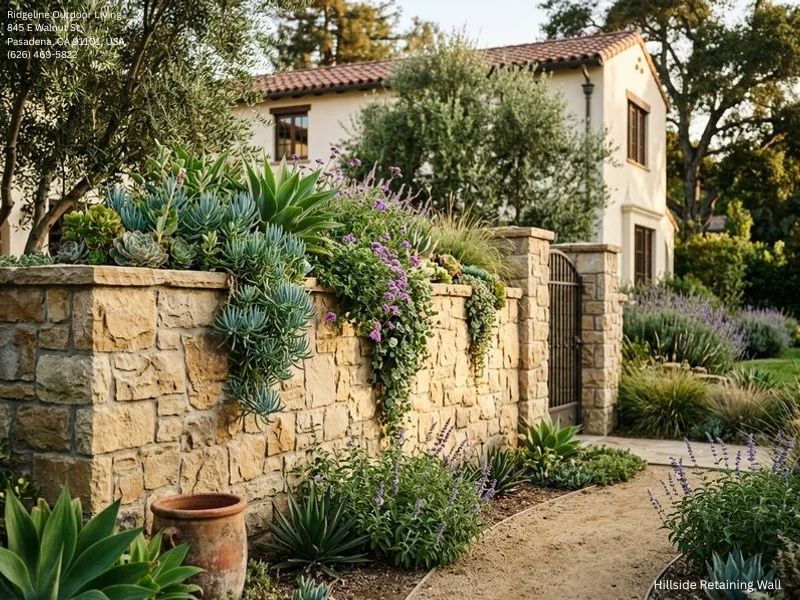
On a hillside in Silver Lake, a segmented retaining wall with limestone cap stones terraces a steep yard. The owner originally asked for natural stone full-face walls, but engineering and budget steered us toward a structural block core with stone veneer only on the main view wall. The effect reads high end where it matters and performs quietly behind the scenes.
A West LA driveway with gray pavers and a concrete band lived happily until a nearby irrigation head drifted. Calcium staining appeared along the concrete edge first. We adjusted the nozzle, cleaned the marks, and applied a breathable sealer. That small maintenance note now sits in our closeout packet alongside 10 Outdoor Lighting Mistakes That Reduce Curb Appeal to help owners keep finishes crisp.
Sustainability and code, without the buzzwords
Sustainability here is practical. Drought pushes us to limit irrigated turf, funnel roof and hardscape runoff to bioswales or permeable fields where soil accepts it, and select materials that do not require frequent replacement. Many cities in the region now enforce LID requirements on remodels, particularly for added hardscape square footage. Permeable pavers, gravel bands, and enlarged planting areas help you meet those thresholds and keep yards livable.
Fire hardening matters on the margins. Choose non-combustible surfaces, ember-resistant vents near outdoor rooms, and avoid mulch islands right next to structures. In parkside neighborhoods where coyotes and raccoons roam, avoid porous joint sands that invite ant farming.
Pulling it together: material palettes that work
A cohesive backyard often comes down to three surfaces that talk to each other: a main field, an accent, and a transition. Here are pairings that have worked well across 15 Luxury Hardscape Ideas for Southern California Homes without feeling overdesigned.
- Warm ivory travertine patio with dark bronze metal accents and a decomposed granite path through a native garden. Charcoal concrete pavers for the drive, a light gray concrete entry walk with saw-cut joints, and a porcelain courtyard with a subtle stone look. Sandblasted limestone dining terrace under a pergola, quartzite step treads, and a gravel utility side yard tucked out of sight.
Keep the count low. Too many textures read busy in our bright light and interrupt the calm that makes outdoor rooms inviting.
When to call a pro, and what to ask
Some projects are clear DIY candidates. A small DG path or a raised planter can be a weekend win. Structural work on slope, new drainage tied to the street, or a major driveway replacement deserves a design-build team that carries both ideas and accountability. If you interview firms, 10 Questions to Ask Before Hiring a Landscape Contractor includes a few that matter most: What base specs do you use for my soil type? How will you stage and protect existing trees and utilities? What is your plan if we hit groundwater or see unexpected movement?
Design expertise pays off in coordination as much as in beauty. How Ridgeline Outdoor Living Approaches Design-Build Landscaping is simple: align materials to climate and maintenance comfort, lock in drainage early, phase sensibly, and use lighting and planting to elevate good bones.
Final thought: choose for the life you will live outside
The best hardscape for Southern California is not a single material. It is a set of choices that reflect how you will use the space, how your site sheds or drinks water, and how much maintenance you want to carry. Concrete pavers win for resilience and repairability, porcelain for clean modern lines with minimal upkeep, and natural stone for character that deepens with age. DG and gravel offer casual charm and permeability. Decks extend living on slopes when patios cannot.
Tie those surfaces to drought-wise planting, right-sized lighting, and a layout that welcomes friends. If you want to go deeper on features, from 12 Backyard Entertainment Features Every Homeowner Should Consider to How to Prevent Yard Flooding With Proper Drainage Solutions, bring those ideas to the first conversation. We will translate them into materials that feel right underfoot in July and still look good when the jacarandas bloom next spring.